







The question every rider asks at the counter
You ask for engine oil and get two options: one bottle says “mineral”, another says “fully synthetic” and costs noticeably more. Is the expensive one worth it, or is it clever packaging?
The honest answer depends on your engine, your roads and how you ride. This guide explains what actually changes between mineral, semi-synthetic and synthetic oils, so you can spend on protection where it pays back and save where it does not.
What is mineral engine oil?
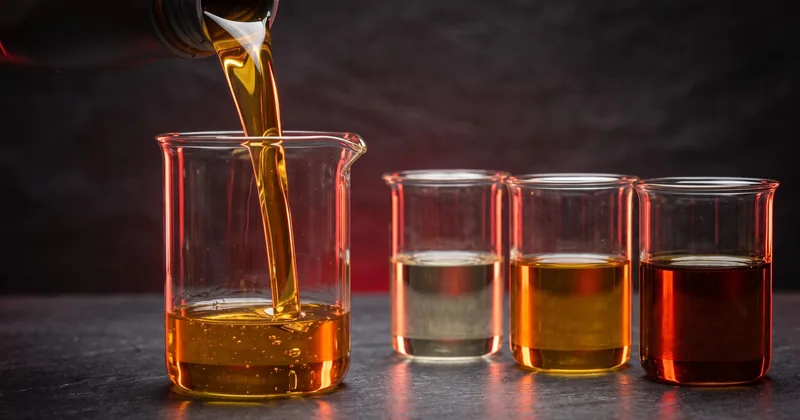
Mineral engine oil is made from crude oil refined into a lubricating base oil, then blended with additives such as detergents, anti-wear agents and anti-oxidants. Refining removes most impurities, but the base oil still contains molecules of many shapes and sizes.
That natural variety is why mineral oils thin out more in heat, oxidise faster and form more deposits over time. In return they are economical, widely compatible and perfectly adequate for many older engines, especially when the oil is changed on schedule.
What is synthetic engine oil?
Synthetic engine oil uses base oils that are either very highly refined (industry Group III, often labelled “synthetic technology”) or built molecule by molecule, such as PAO (Group IV) and esters (Group V). The result is a base oil with far more uniform molecules.
Uniform molecules mean more predictable behaviour: the oil flows faster when cold, holds its thickness better when hot (a higher viscosity index), resists oxidation and keeps engines cleaner. Many fully synthetic oils sold today are built on Group III base oils, while premium formulations add PAO or esters.
What is semi-synthetic (synthetic blend) oil?
Semi-synthetic oil blends synthetic base oil with mineral base oil. It captures a good share of synthetic performance, especially heat resistance and cleanliness, at a price closer to mineral oil. For daily commuters in hot, crowded cities it is often the sweet spot between protection and budget.
Synthetic vs semi-synthetic vs mineral oil: side-by-side
| What matters | Mineral | Semi-synthetic | Fully synthetic |
|---|---|---|---|
| Base oil | Refined crude (Group I/II) | Mineral + synthetic blend | Group III, PAO or esters |
| Heat and oxidation resistance | Good | Better | Best |
| Cold-start flow | Good | Better | Best |
| Deposit and sludge control | Good | Better | Best |
| Stability over the drain interval | Shortest | Longer | Longest (within the manual’s limit) |
| Price per litre | Lowest | Medium | Highest |
| Ideal for | Older, low-stress engines; short drain intervals | Daily commuting in heat and traffic | BS6 engines, high-revving bikes, cars, long rides |
All three types come in the same viscosity grades. A 20W-40 is a 20W-40 whether it is mineral or synthetic: what changes is how long and how well it protects at that thickness.
Is synthetic oil worth it in Indian conditions?
Synthetic oil earns its price where engines are pushed hardest, and Indian roads push engines hard. It is usually worth it if one or more of these describe you:
- You ride through hot summers: air-cooled engines in 40°C+ traffic run very hot, and synthetic base oils resist thinning and oxidation far better.
- Your commute is stop-go: idling in traffic in Delhi, Mumbai or Hyderabad heats oil without the cooling airflow of open-road riding.
- You own a BS6 bike or car: fuel-injected BS6 engines run tighter tolerances and benefit from cleaner, more stable oil.
- You ride hard or far: high revs, highway touring and pillion loads raise oil temperature.
- You ride a lot: delivery riders, taxi and fleet operators put on kilometres quickly, where a stable oil keeps protection consistent between changes.
Think cost per kilometre, not cost per bottle
A cheaper oil that you must change sooner, or that lets deposits build up, is not always the cheaper choice. Divide the price of each oil change by the kilometres you actually get from it within your manual’s interval. Add the value of cleaner running, steadier mileage and less wear. For many riders in hot, crowded cities, a semi-synthetic or synthetic oil costs about the same per kilometre and protects better.
When mineral oil is still the right choice
- Older carburettor bikes and engines designed around mineral oils and short drain intervals.
- Low annual kilometres where the oil is changed by time (every few months) long before it is worn out.
- Workshop and fleet use with strict, short service schedules where cost per change matters most.
- When the manual specifically calls for it. The manufacturer knows the engine best.
Can you switch from mineral to synthetic oil?
Yes. Modern mineral, semi-synthetic and synthetic engine oils of the same grade and specification are compatible, and switching at your next oil change is safe. You can also switch back later.
A common worry is that synthetic oil “causes leaks”. It does not damage seals. On a very old engine, its better cleaning action can sometimes reveal a seal that was already worn and held back by deposits. If your engine has a known leak, fix it first or ask your mechanic before switching.
Which MAXX-LUBE oil matches your riding?
Every oil below is a 4-stroke motorcycle or car engine oil. Choose the grade your manual specifies, then the level of protection that fits your riding.
- Fully synthetic, for maximum protection: POWER SPEED+ 20W-40 (API SN) and POWER GOLD 20W-40.
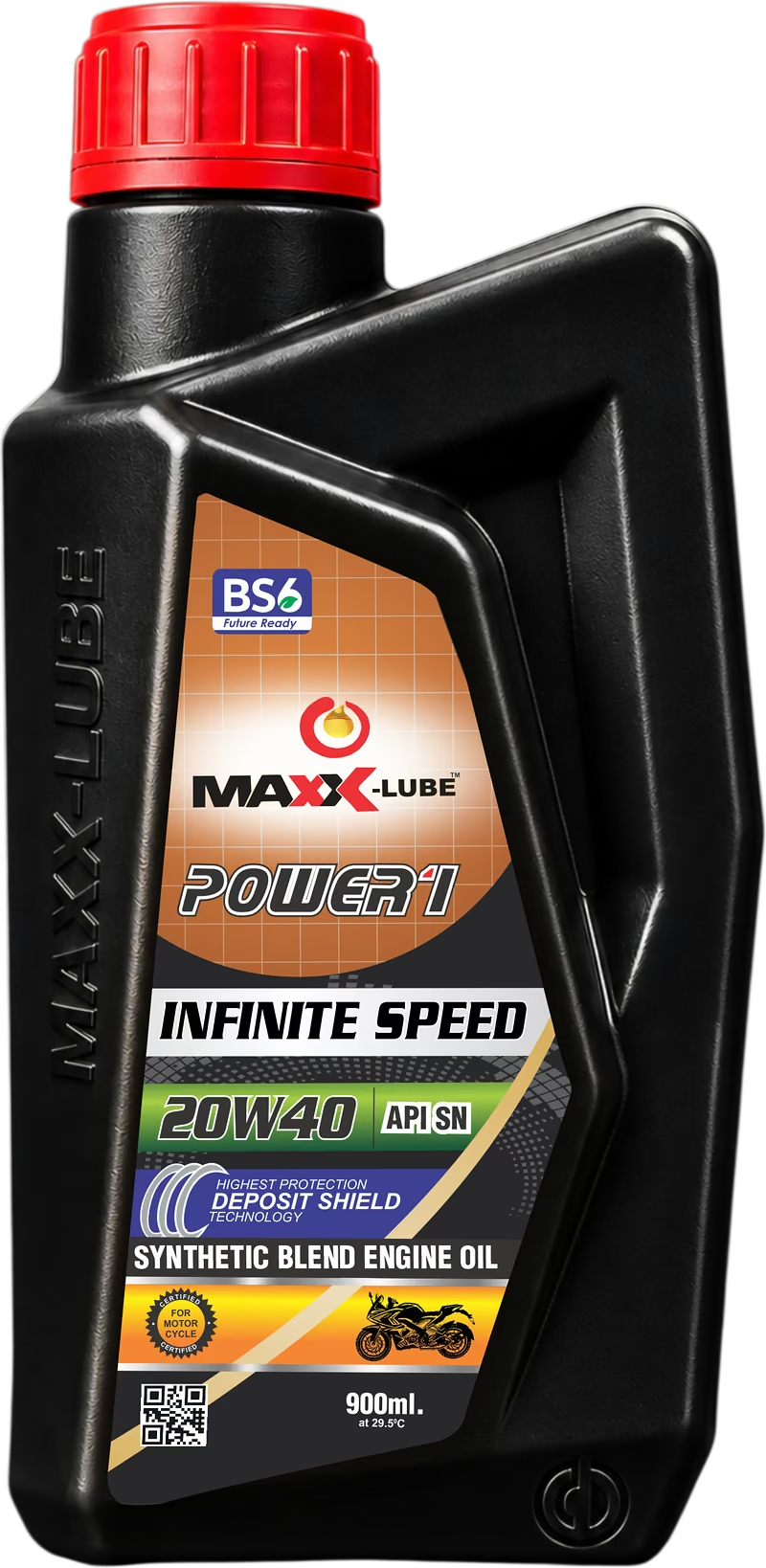
- Synthetic blend, for hard daily riding: INFINITE SPEED 20W-40 and ULTRA SPEED-4T 20W-40, both API SN.
- Semi-synthetic, for the best value in city traffic: EXTREAM-4T 20W-40, SPRINT-4T 10W-30 and POWER+PLUS 20W-40.
- Premium mineral, for dependable economy: 4T PLUS 20W-40.
- Cars and SUVs: ULTRA POWER 5W-30 and ULTRA SYNTH 10W-40 with synthetic technology.