






Why the right grease matters more than you think
A wheel bearing that runs dry on a loaded truck, a tractor trolley hub that fills with water after the monsoon, a king pin that squeaks and wears into an oval: most of these failures start with the wrong grease, too little grease, or too much.
Grease looks simple, but the tub you pick decides whether a bearing lasts years or months. This guide explains what grease is made of, how to read NLGI grades, and exactly which type to use where.
What is grease made of?
Every grease has three ingredients, and each one does a different job:
- Base oil (about 70–95%): does the actual lubricating. Its thickness decides how well the grease protects at speed and under load.
- Thickener (about 3–30%): a soap or other structure that holds the oil like a sponge and releases it slowly into the bearing. It largely decides heat and water resistance.
- Additives: extreme-pressure (EP) agents for shock loads, rust and corrosion inhibitors, anti-oxidants and tackiness agents that help grease stick.
NLGI grades: how firm should your grease be?
The NLGI (National Lubricating Grease Institute) grade measures consistency using a cone penetration test (ASTM D217). A softer grease lets the cone sink deeper, and gets a lower NLGI number.
| NLGI grade | Worked penetration (0.1 mm) | Consistency | Typical use |
|---|---|---|---|
| 00 / 0 | 400–430 / 355–385 | Semi-fluid | Centralised lubrication systems, enclosed gear cases |
| 1 | 310–340 | Soft | Centralised systems, low temperatures |
| 2 | 265–295 | Like peanut butter | The most common multi-purpose grade: bearings, chassis, general use |
| 3 | 220–250 | Firmer | Wheel bearings, higher speeds, hot climates, vertical or leak-prone points |
| 4 and above | 175–205 and firmer | Hard | Special applications only |
In most of India, where temperatures are high for much of the year, NLGI 3 greases are popular for wheel bearings and general vehicle use because they stay in place and resist softening and leakage. NLGI 2 is easier to pump through grease guns and centralised systems.
Lithium, calcium, lithium complex: grease types compared
| Grease type | Approx. dropping point | Strengths | Best for |
|---|---|---|---|
| Lithium | About 190°C | Balanced all-rounder, good mechanical stability, moderate water resistance | General automotive and workshop use, bearings, chassis |
| Lithium complex | Above 250°C | High-temperature stability, good water resistance, long life | Wheel bearings and hubs under heavy braking and load |
| Calcium (hydrated) | About 100°C | Excellent water resistance, low cost | Chassis points, water pumps, wet low-temperature areas |
| Calcium sulphonate complex | Above 300°C | Excellent water resistance, strong EP and rust protection | Construction, mining, heavy and wet duty |
| Bentonite (clay) | Non-melting | Very high temperature capability | Slow, very hot bearings in industrial plants |
The dropping point is the temperature at which grease becomes liquid enough to drip. A grease should always be used well below its dropping point. Wheel bearings near hot brakes need the most heat margin.
Which grease to use where
| Application | What it needs | Choose |
|---|---|---|
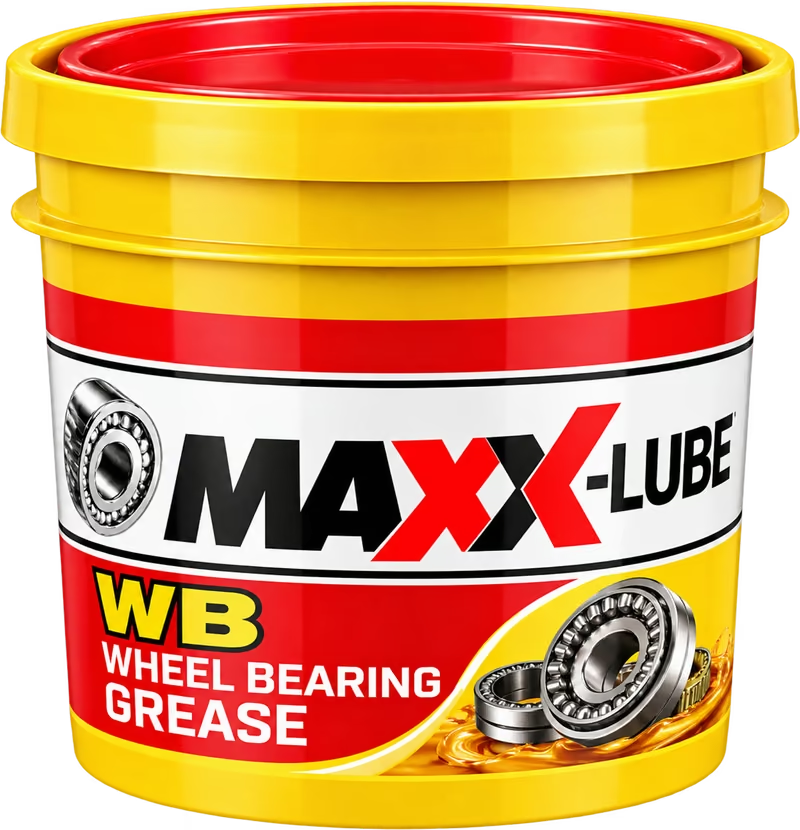
| Wheel bearings and hubs (cars, trucks, trolleys) | Heat stability, EP protection, stays in the bearing | High-temperature wheel bearing grease such as WB GREASE |
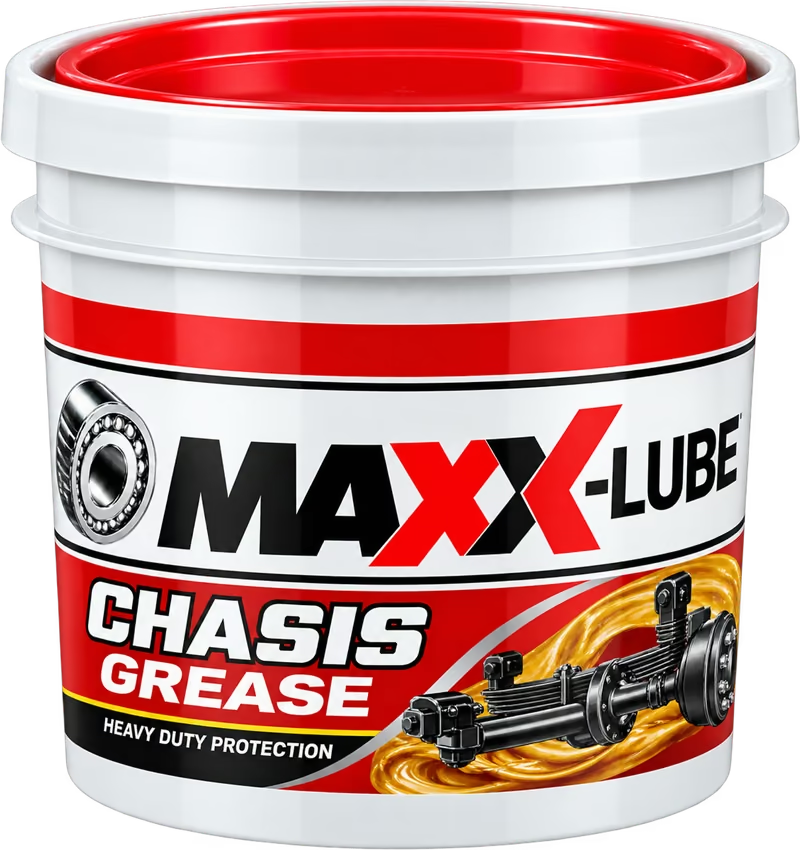
| Chassis points, king pins, spring shackles, U-joints | Water resistance, adhesion, shock-load protection | CHASIS GREASE or a water-resistant grease such as RED GEL |
| Tractors, trolleys and farm implements | Water, dust and mud resistance; EP for shock loads | Multi-purpose NLGI 3 such as AP-3 or GP-3 |
| Two-wheeler steering cones and swing-arm pivots | Water resistance, long life | Multi-purpose NLGI 2 or 3 grease |
| Workshop machinery, pumps and motors | General bearing protection, pumpability | AP-3 GREASE |
| Construction equipment pins and bushes | EP and water resistance under heavy shock loads | Heavy-duty EP grease as specified by the machine maker |
What is AP-3 grease?
“AP-3” is the widely used Indian name for an all-purpose, NLGI grade 3 grease. It is the grease most workshops, farmers and fleet operators keep in a bucket for everyday greasing: bearings, chassis nipples, implements and machinery. Its firmer NLGI 3 consistency stays in place in hot weather and resists being washed out.
For wheel bearings on heavily loaded vehicles, or hubs close to hot brakes, step up to a dedicated high-temperature wheel bearing grease.
How to grease a wheel bearing correctly
- Clean out old grease completely: wash the bearing and hub with a suitable solvent and let them dry. Old, contaminated or different grease must not stay behind.
- Inspect before packing: replace bearings with pitting, blue heat marks, rough rotation or a damaged cage.
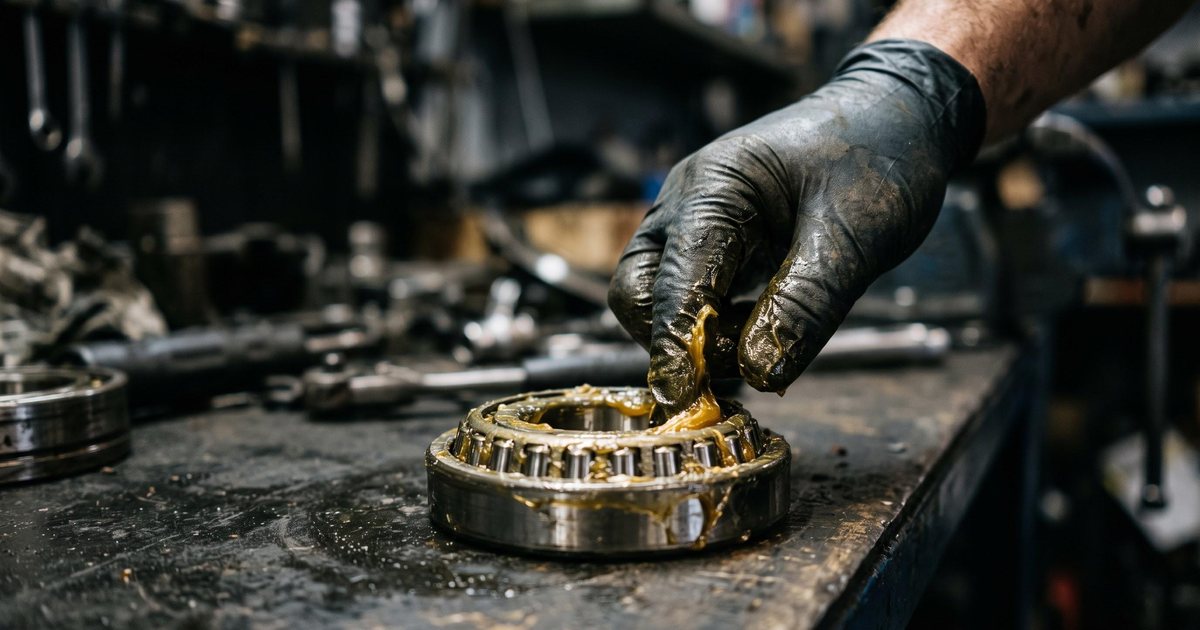
- Pack the bearing fully: press grease into the wide side of the bearing (by hand or with a bearing packer) until it comes out through the rollers on the other side, all the way around.
- Do not overfill the hub: fill the hub cavity only partly, commonly a third to a half. Too much grease churns, overheats and pushes past the seals.
- Fit new seals and set preload: use new seals and adjust the bearing to the manufacturer’s specification.
Greasing mistakes that shorten bearing life
- Mixing incompatible greases: some thickeners (for example lithium with certain clay or polyurea greases) react and soften into a runny mess. When changing grease type, clean out the old grease first.
- Over-greasing: extra grease causes heat, blows out seals and can reach brake linings.
- Dirty grease guns and nipples: always wipe the grease nipple before pumping, or you push dust straight into the bearing.
- Using chassis grease in hot hubs: low-temperature greases can melt and run out of hot wheel bearings.
- Forgetting after water: after a flooded road, river crossing or pressure wash, re-grease exposed points.
Farm tip: grease before the season, not during a breakdown
Before the kharif and rabi seasons, grease every nipple on tractors, trolleys, cultivators, rotavators and threshers in one go. It takes less than an hour, and it is far cheaper than a seized bearing in the middle of sowing or harvest, when every day in the field counts.
MAXX-LUBE greases
Available in 500 g, 1 kg, 3 kg and 18 kg packs for riders, farmers, workshops and fleets:
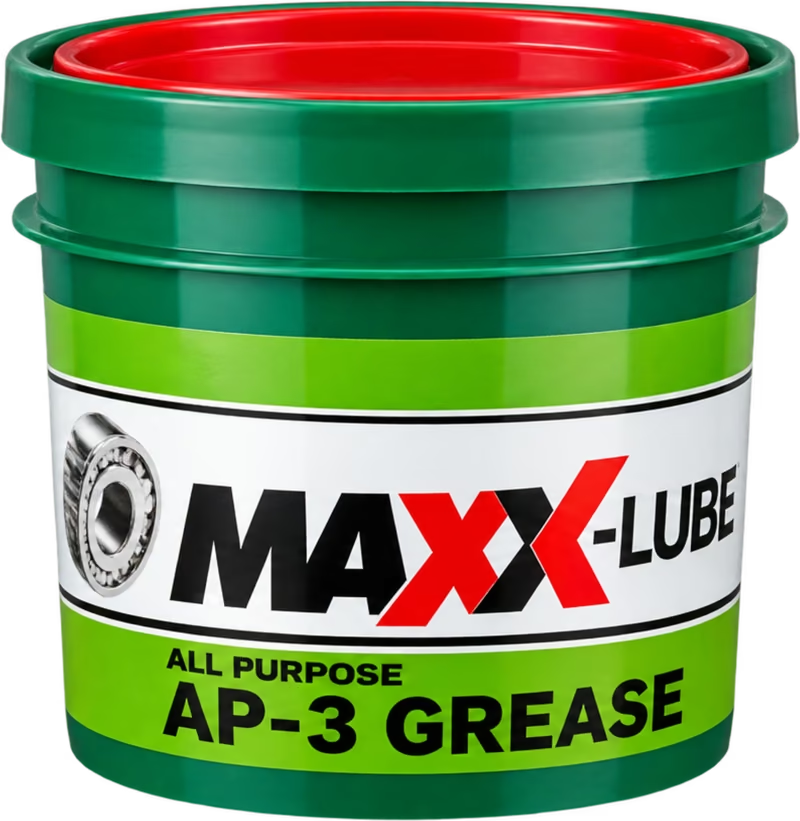
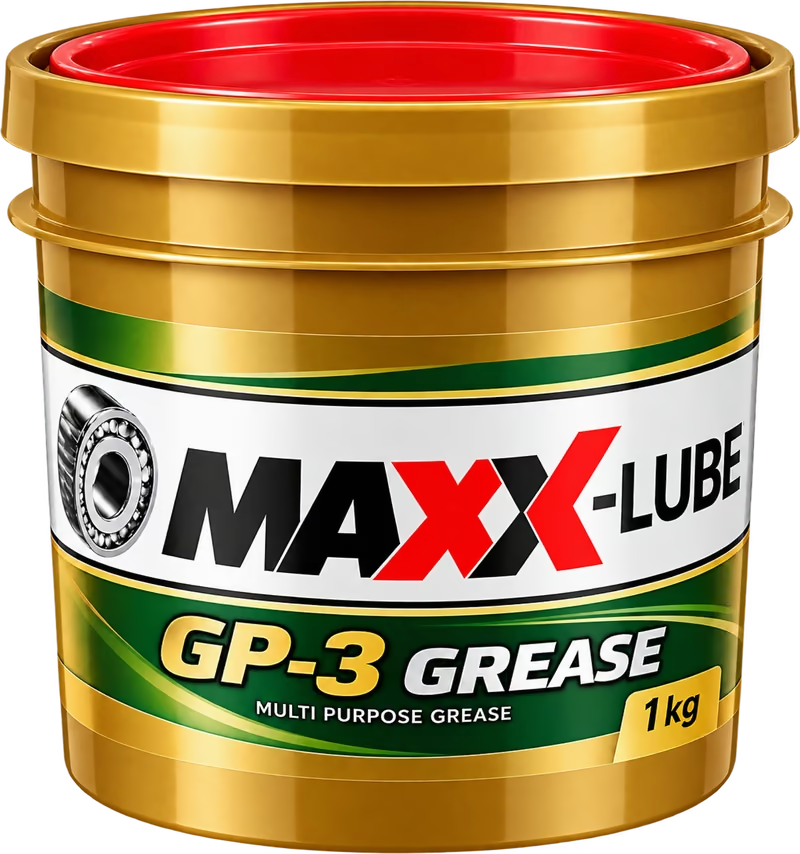
- [AP-3](/products/greases/ap3-grease) and [GP-3](/products/greases/gp3-grease), NLGI 3: all purpose and multi purpose greases for bearings, chassis points and general lubrication, from 100 g packs to 180 kg drums. AP-2/3 comes in NLGI 2 and 3 for bulk users.
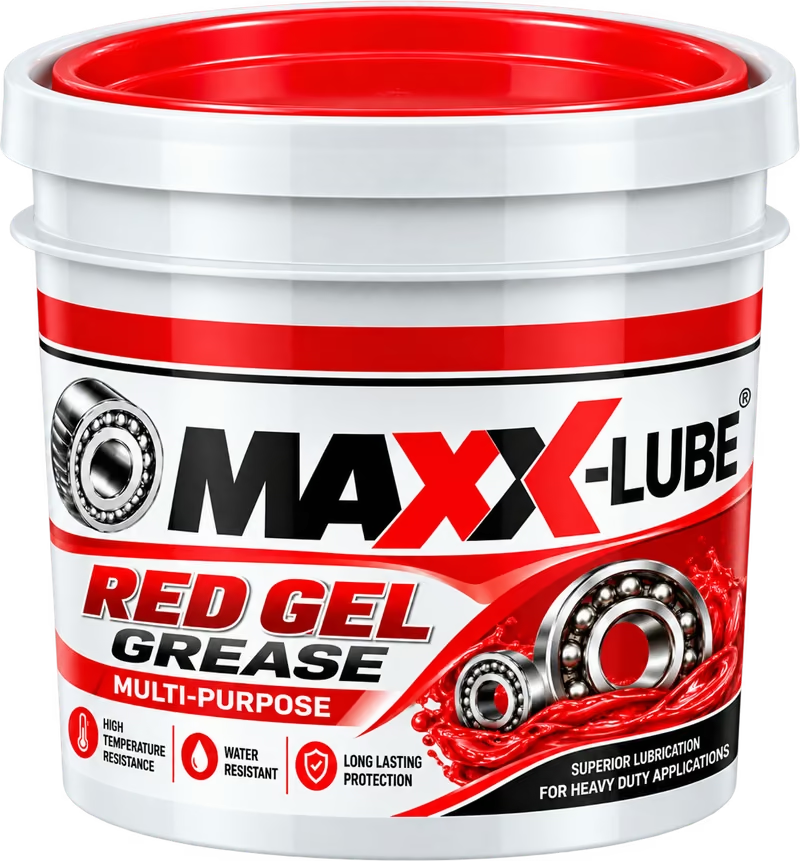
- [RED GEL](/products/greases/red-gel-grease): a multi-purpose grease with high temperature and water resistance for heavy duty applications.
- [WB GREASE](/products/greases/wheel-bearing-grease) and [CHASIS GREASE](/products/greases/chassis-grease): a wheel bearing grease for hubs and bearings, and a heavy duty grease for chassis lubrication points.